

A good mixing tub can make wet trades cleaner, quicker and more consistent. It gives the mixer paddle room to work, helps contain splashes and provides a stable container for preparing plaster, render, mortar, resin and other flowable construction materials.
The quoted capacity is the total capacity of the tub, not necessarily the amount that should be mixed in one batch. The material, water ratio, mixer, working time and the headroom needed above the mix all affect the practical batch size.
What is a mixing tub
A mixing tub is a robust, reusable container designed for combining dry or liquid materials on site. Compared with a general-purpose household bucket, a purpose-made construction tub normally has thicker walls, a wider opening and enough rigidity to resist movement while a powered paddle mixer is being used.
The wide opening helps the operator add material steadily, move the paddle around the tub and check whether powder remains around the sides or base. Tall sides and spare capacity above the mix help reduce splashing.
Mixing tub bucket or wash tub
The terms are sometimes used interchangeably, but the job should determine the container.
- A small bucket is convenient for measured quantities, hand mixing and carrying water.
- A mixing tub provides more working room for powered mixing and larger batches.
- A gauging bucket is useful when accurately measuring water or dividing material into repeatable quantities.
- A wash tub should ideally be kept separate, so dirty water or partially cured residue cannot contaminate the next batch.
Using one container for every task may appear convenient, but contamination can affect colour, setting time, bonding and the finish of the next mix.
What size mixing tub do you need


Choose the tub around the mixed volume rather than the dry weight printed on the bag. Two products supplied in similar bag sizes can produce different mixed volumes and may require different quantities of water.
Allow generous headroom. An overfilled tub leaves little space for adding powder, moving the paddle or controlling the initial burst of dust and splashes. It also makes it harder to reach unmixed material at the bottom without throwing material over the rim.
Before selecting a size, consider:
- the product manufacturer’s permitted batch size and water ratio;
- the capacity and recommended operating range of the mixer;
- the material’s pot life or working time;
- whether the entire batch can be placed before it begins to stiffen;
- the weight of the mixed material; and
- the room needed to keep the paddle fully immersed without contacting the tub.
A larger tub can give useful working space, but it should not be treated as permission to make a batch that is too large for the product, mixer or installation team.
Features worth looking for
Rigid durable walls
A powered mixer creates considerable movement. Thick, rigid walls help the tub remain stable and reduce flexing, particularly when the operator works around the perimeter of the mix.
A wide opening and tall sides
The operator needs clear access for adding material and moving the paddle. Tall sides help contain splashes, while a wide opening makes it easier to inspect and scrape down the mix.
Secure handles
Handles are useful for positioning an empty tub and moving light contents. A full 75-litre tub can be extremely heavy, however. Do not assume that moulded handles make a full tub safe to lift manually. Reduce the load, use a suitable trolley or mechanical aid, and follow the site’s manual-handling assessment.
A smooth cleanable interior
Dried fragments can break away into a fresh batch. A smooth interior is easier to scrape and wash immediately after use, before the material cures.
Material compatibility
Check that the tub is suitable for the material being mixed and for any cleaning product being used. This is particularly important with resins, reactive products and solvent-based cleaners. Follow both the material and container manufacturers’ instructions.
How to use a mixing tub
- Put the tub on a firm, level surface with adequate ventilation and enough room to work safely.
- Check that it is clean, dry where required, undamaged and free from old material.
- Read the product data sheet and measure the correct amount of clean water or liquid component.
- Add liquid and powder in the order specified by the material manufacturer.
- Use the correct paddle and mixer speed. Keep the paddle below the surface where possible to reduce air entrainment and splashing.
- Move the paddle methodically around the base and sides without striking the tub.
- Scrape down the sides if the product instructions allow it, then remix for the stated time.
- Use the material within its stated working time. Never try to revive material that has begun to set by adding extra water.
Wear the personal protective equipment specified by the material manufacturer. Control dust when opening and adding dry powder, and keep cables and electrical equipment away from water and wet material.
Choosing from the ScreedGiant range
The right container depends on the material, quantity and mixing method.
- The ARDEX 10-litre tiling mixing bucket is suited to measuring and smaller quantities of screeds, grouts and adhesives.
- The ARDEX 30-litre mixing bucket provides additional room for mixing cement, grout and mortar.
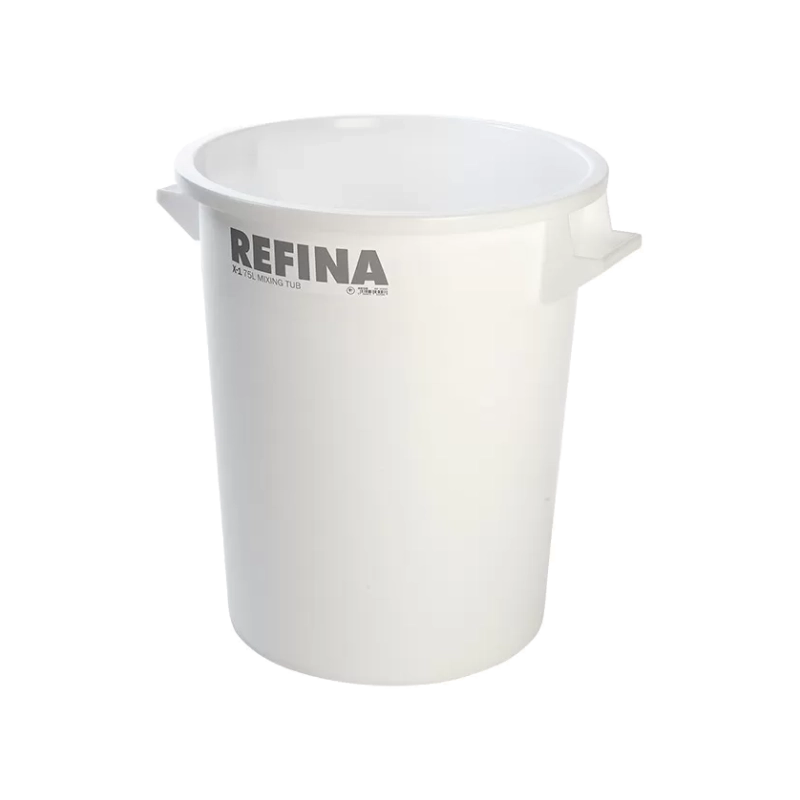
- The REFINA Heavy Duty Mixing Tub 75L White is a rigid, thick-walled tub with moulded side handles. Its stated dimensions are approximately 49 cm wide by 57 cm high, and it is intended for plaster, render, mortar and epoxy.
- The REFINA Heavy Duty Mixing Tub 90L Black is a wider, heavy-duty option for bulkier materials including hardwall and render.
Whichever tub you choose, match it to a suitable mixer and paddle. ScreedGiant also supplies professional mixing equipment including the REFINA Megamixer MM22.
Cleaning and looking after the tub
Clean the tub as soon as the batch is finished. Remove as much residue as possible before washing, using tools that will not gouge or weaken the plastic. Keeping a dedicated tub for sensitive materials, coloured products or resins can reduce cross-contamination.
Do not pour cementitious slurry, plaster residue, resin or contaminated wash water into surface-water drains or sinks. Allow for the site’s approved washout and waste arrangements, and follow the product safety data sheet and local disposal requirements.
Inspect the tub regularly. Deep cuts, splits, distorted handles or a weakened base are signs that it should be taken out of service.
The practical rule
Select a mixing tub for the usable working space it provides, not simply the number printed on its side. A stable tub with adequate headroom makes it easier to mix thoroughly, control splashes and keep batches consistent. Match it to the product, mixer and working time, keep it clean, and never create a load that cannot be moved or used safely.
Browse ScreedGiant’s tools accessories and reinforcement range or contact us if you need help locating suitable mixing equipment.