

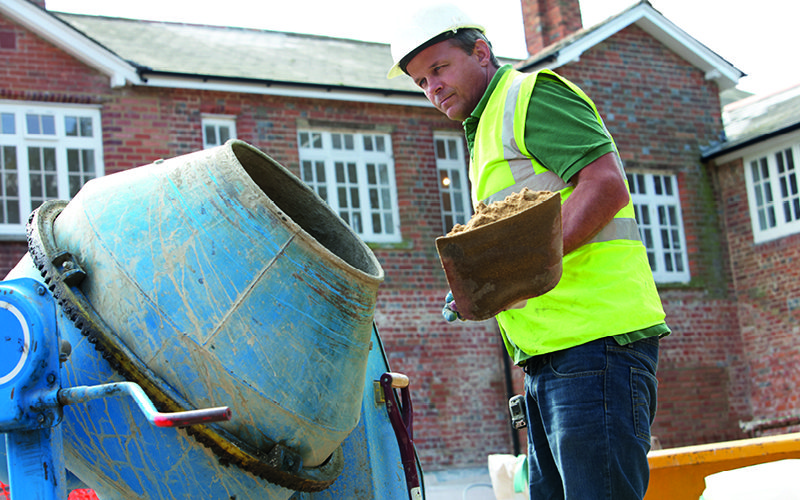
Good concrete work starts before the first batch is mixed. The right tools help you measure accurately, prepare a stable base, place the concrete efficiently and finish the surface without unnecessary delays.
The equipment you need will depend on the size and purpose of the project. A small repair or garden path requires a very different setup from a large floor slab. Use this checklist to plan the job, then check the concrete specification, product data sheets and site risk assessment before work begins.
1 Measuring and setting-out equipment
Accurate setting out reduces wasted material and helps you maintain the required depth and falls. The basic kit may include a tape measure, string line, pegs, marking paint and a spirit or laser level.
Measure the area in several places rather than assuming it is perfectly square. Mark the finished height clearly and check that the formwork allows for any required slope or drainage. It is also worth calculating the concrete quantity in advance and allowing an appropriate contingency for the project.
2 Shovels and rakes
A sturdy shovel is useful for preparing the sub-base, moving dry materials and distributing small quantities of concrete. A rake can help spread material across the pour before it is levelled.
For fresh concrete, use a tool suitable for the job and avoid dragging reinforcement, underfloor heating pipes or membranes out of position. Larger pours may require a dedicated concrete rake or come-along rather than an ordinary garden rake.
3 Compaction equipment
The ground and sub-base must be prepared to suit the project before concrete is placed. Depending on the construction, this may involve a hand tamper or a powered plate compactor.
Fresh concrete may also require compaction to remove trapped air and fully surround reinforcement. The correct method depends on the mix, depth and specification. Some work can be compacted by tamping, while structural or deeper pours may require suitable vibration equipment. Excessive vibration can cause segregation, so always follow the project specification.
4 A suitable concrete mixer
Consistent mixing is essential. For very small quantities, a robust mixing tub and suitable paddle mixer may be sufficient. Larger or repeated batches are usually easier to produce with a mixer chosen for the material and required output.
Do not overload the mixer or guess the water content. Measure liquids accurately and follow the concrete or repair-product instructions. Adding extra water simply to make a mix easier to place can change its performance and may contribute to reduced strength, dusting, colour variation or cracking.
For appropriate materials, ScreedGiant supplies professional REFINA paddle mixers and a range of MudMixer equipment for more continuous mixing and placing.
5 Mixing tubs and measuring buckets
A purpose-made mixing tub provides room for the paddle to work while helping to contain splashes. Its practical batch capacity will be lower than its total volume because the operator needs sufficient headroom above the material.
Use a clean measuring bucket or graduated container for water. Do not use the same dirty bucket for measuring, tool washing and adding liquid to the mix. The REFINA 75-litre heavy-duty mixing tub is a tall-sided option for plaster, render, mortar, epoxy and other suitable construction materials.
6 Wheelbarrows and material-handling equipment
Wheelbarrows can be useful for moving concrete over short distances, but they must be stable, suitable for the load and used on a planned route. Check access, gradients and ground conditions before the pour starts.
Do not overfill a wheelbarrow or rely on it where a pump, chute or other placing method would be safer and more efficient. Larger projects should include a clear delivery and placing plan so concrete is not left waiting while equipment is moved.
7 A straight edge or screed rule
Once the concrete has been distributed, a straight edge or screed rule is used to strike off the excess and bring the surface to the required level. The tool should span the formwork or guide rails with enough length for controlled movement.
Work progressively and fill low areas before passing the rule over the surface again. Avoid repeated unnecessary working, which can disturb the concrete and draw too much paste towards the surface.
The REFINA heavy-duty straight edge is available in several lengths for levelling and ruling-off work.
8 Floats
A float is used after striking off to level small ridges, close the surface and prepare it for the required finish. Floating is not intended to bring excess water to the top. If bleed water is visible, do not work it back into the surface or attempt to dry it by scattering cement over it.
Timing matters. Starting too early can trap bleed water or weaken the surface, while leaving the operation too late makes finishing difficult. The correct technique depends on the concrete, weather and specified finish.
For suitable screed, render and sand-and-cement work, see the range of REFINA premium poly floats.
9 Edging, jointing and trowelling tools
Hand edgers help form a neat perimeter where the specification requires one. Groovers or jointing tools can create planned control joints in smaller slabs, although the position, depth and timing of joints must follow the project design.
A hand trowel can produce a denser, smoother finish once the surface is ready. Large floors may use powered finishing equipment, but power trowels require trained operators and are not suitable for every mix, slab or finish. ScreedGiant’s Master Trowel range includes professional equipment for larger concrete-floor applications.
10 Curing and protection equipment
Finishing is not the end of the job. Fresh concrete must be protected from rapid moisture loss, rain, frost, excessive heat, foot traffic and accidental damage.
The curing method should suit the mix and specification. Depending on the project, this may involve suitable sheeting, curing membranes, insulated covers or controlled wet curing. Have the required materials ready before pouring; waiting until the surface begins to dry is too late.
Do not forget personal protective equipment
Wet concrete and cement-based products can cause serious skin damage and burns. Cement dust can also irritate the eyes and respiratory system. Suitable protection may include waterproof alkali-resistant gloves, safety footwear, long sleeves, eye protection and respiratory protection where the risk assessment requires it.
Prevent wet material from getting inside gloves or boots, avoid kneeling in fresh concrete and wash contamination from the skin promptly. Always follow the product safety data sheet and the site’s COSHH assessment.
Plan for cleaning and waste
Decide where tools will be cleaned before the work begins. Concrete, cement slurry and contaminated wash water must not be allowed to enter surface-water drains, sinks or the ground.
Remove excess material first and use the site’s approved washout and waste arrangements. A system such as the SlurryTub portable filtration system can help separate wet-trade slurry from water as part of an appropriate disposal process.
Choose tools for the job rather than the list
Not every project needs all ten tool groups, and some work will require specialist equipment not covered here. Start with the design and concrete specification, consider access and batch size, and plan every stage from preparation through to curing and cleaning.
Having the correct equipment ready helps the work proceed consistently and reduces the temptation to improvise while the concrete is setting. If you are unsure which mixing, levelling or finishing tools suit your project, contact ScreedGiant before ordering.